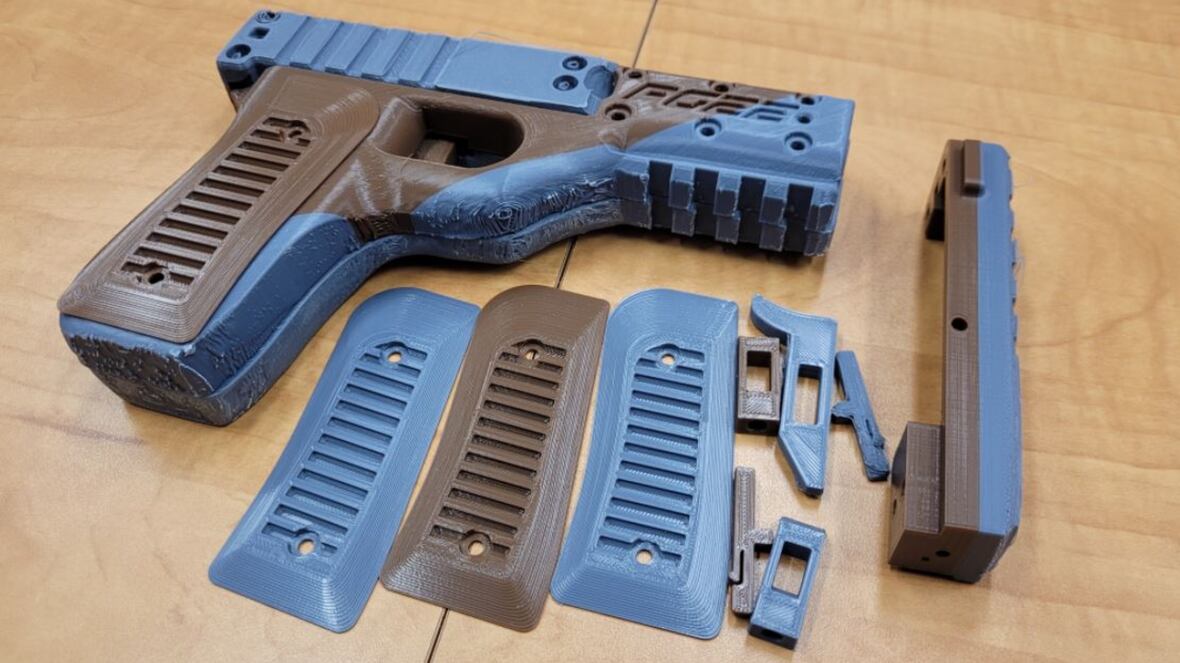
California has been exploring legislation aimed at 3D printers, digital fabrication, and the growing maker ecosystem for a while now. Depending on who you ask, these proposals are either a necessary modernization of public‑safety law or a misguided attempt to apply 2D‑printer‑style DRM to an entirely different technology. What’s clear is that the conversation is being shaped by misunderstandings about what 3D printers can do, what the law already covers, and how DRM has historically failed consumers. This post breaks down the current legal landscape, the parallels to 2D‑printer restrictions, and whether the proposed legislation would meaningfully improve safety—or simply burden ordinary users.
29180, manufacturing a firearm without a serial number is illegal, and possessing an unserialized firearm is also illegal. Selling or transferring a 3D‑printed firearm is prohibited, and while possessing CAD files is not illegal by itself, using them to manufacture a gun is. Penalties range from misdemeanors to felonies, including fines, firearm bans, and potential federal charges under the Undetectable Firearms Act.
Even beyond the legal issues, consumer‑grade 3D printers are not well‑suited to producing functional firearms. Most cannot withstand the pressures involved, and the few designs that do work—such as the Liberator or FGC‑9—require metal inserts, specialized filaments, machining, and significant technical knowledge. In practice, the people capable of producing a functional firearm this way are already intentionally violating multiple laws. DRM on printers would not stop them. For deeper context, you can explore 3D‑printed firearm legality.
2. DRM Has Consistently Failed as a Safety or Control Mechanism
Digital Rights Management has a long history of failing at its stated purpose. Whether applied to music, movies, tractors, or printers, DRM has repeatedly proven ineffective at stopping bad actors while frustrating legitimate users. It introduces security vulnerabilities, restricts ownership, and often becomes a tool for corporate control rather than public safety. Applying DRM to 3D printers would follow the same pattern. Anyone determined to break the law could simply use open‑source firmware, build their own printer, buy a non‑DRM printer from abroad, or flash the controller board. DRM only stops the people who weren’t doing anything wrong. More background is available through DRM history.
3. The 2D‑Printer Industry Shows Exactly What Not to Do
If lawmakers want a case study in how DRM harms consumers, they need only look at HP, Canon, Epson, and other 2D‑printer manufacturers. Over the past decade, these companies have turned printers into subscription machines through cartridge chips, firmware updates that disable third‑party ink, “dynamic security” lockouts, and printers that stop working when ink is “expired.” Subscription ink programs often charge users even when they don’t print. This is the same logic now being proposed for 3D printers: the idea that devices should only work when the manufacturer approves.
Ink‑tank printers—Epson EcoTank, Canon MegaTank, Brother INKvestment—became popular because consumers were fed up with cartridge DRM. HP resisted this model for years because cartridges were extremely profitable. They only shifted toward tank systems after competitors gained market share, consumer backlash intensified, and lawsuits challenged their DRM practices. Market pressure, not goodwill, forced the change. A deeper look at these practices is available through 2D‑printer DRM practices.
4. Would California’s Proposed 3D‑Printer Legislation Actually Work?
Some versions of the proposed legislation have included mandatory serial numbers on 3D printers, mandatory logging of prints, user identification requirements, firmware restrictions, DRM‑style controls on what can be printed, and even requirements that printers “recognize” gun‑shaped objects. These ideas raise significant concerns. They treat every hobbyist like a criminal, create privacy risks by potentially logging or monitoring prints, stifle innovation in education and small businesses, and are ultimately unenforceable. Open‑source printers and firmware exist, and anyone intending to manufacture a weapon illegally can simply bypass DRM by building a printer from parts, buying one out of state, or using a CNC or resin printer instead. The legislation risks becoming security theater—burdensome for normal users but ineffective against crime.
5. What Effective Legislation Could Look Like
If lawmakers genuinely want to reduce illegal firearm manufacturing without harming the maker community, they could focus on strengthening enforcement of existing ghost‑gun laws, which already cover 3D‑printed guns. They could target the distribution of completed illegal firearms rather than the tools used to make them, just as drills and lathes are not regulated as potential gun‑making devices. Supporting education and safe maker spaces would help promote responsible fabrication, while encouraging open standards would improve transparency and security. Most importantly, avoiding DRM entirely would prevent the creation of devices that work against their owners. Additional policy ideas can be explored through 3D‑printer policy ideas.
Final Thoughts: Devices Should Work for Us, Not Against Us
I am firmly against being forced to buy expensive OEM ink, using devices that spy on what I print, or relying on hardware that stops working because a corporation says so. 3D printers are tools—like drills, saws, or computers—and they should not become surveillance devices or locked‑down appliances. California has an opportunity to craft thoughtful, effective legislation, but copying the 2D‑printer DRM model would repeat the same mistakes that made HP one of the most disliked brands in home printing. The goal should be safety without sacrificing ownership.