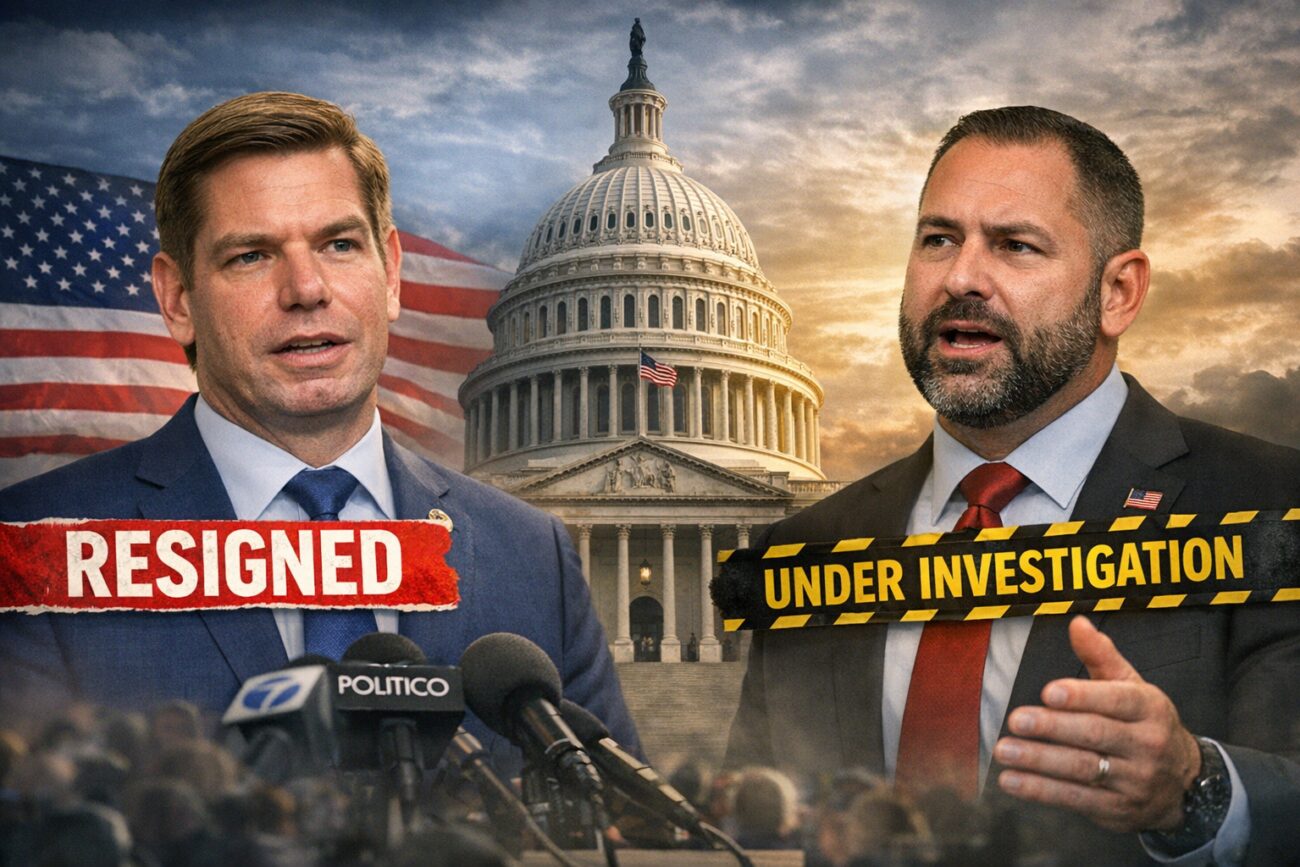
Two congressional scandals broke open this month—and the responses from the lawmakers could not be anymore different. The situations have raised questions about what accountability should look like in public office, and whether the threshold for basic responsibility is shifting.
Eric Swalwell: Stepping Back to Address Allegations
Reporting from multiple outlets states that Rep. Eric Swalwell (D‑Calif.) suspended his California governor campaign after former staffers accused him of sexual assault and misconduct. Major supporters quickly withdrew, and Swalwell announced he would fight the allegations but could not do so while running a statewide race. Soon after, he resigned from Congress as well. Coverage indicates that this decision came amid bipartisan calls for expulsion and the likelihood of a formal vote. In effect, Swalwell removed himself from both the campaign and his House seat to address the allegations outside elected office.
Cory Mills: Rejecting Comparisons and Remaining in Office
Rep. Cory Mills (R‑Fla.) is under House Ethics Committee investigation for allegations including dating‑violence claims and harassment, though no charges have been filed. Mills has publicly rejected comparisons to Swalwell, arguing that his situation is different because it does not involve staff and has not resulted in criminal charges. He has described the matter as a personal dispute and continues to serve in Congress while the investigation proceeds. Some lawmakers have called for his resignation or expulsion, while others point to the ongoing Ethics Committee process as the reason for waiting.
The Larger Question: What Counts as Accountability Now?
The contrast between the two cases has fueled debate about congressional norms. One lawmaker stepped down from both a campaign and his seat to confront allegations directly. Another has remained in office, arguing that the accusations do not warrant resignation. I can agree with that—but Mills is part of a political party that already downplays sexual misconduct, all the way to the top—and he should be held to the same standards (at least in an ideal world). Observers note that these divergent approaches shape public expectations. Some emphasize due process; others warn that minimizing allegations by comparing them to “worse” cases risks lowering the bar for acceptable conduct in public life. The discussion now extends beyond the individuals involved to the broader question of how—and when—Congress enforces its own standards.
Sources
– POLITICO – reporting on Swalwell’s campaign suspension and resignation
– Associated Press – coverage of allegations and congressional responses
– NBC News – reporting on the Mills investigation and public statements